Immigration Processing Time
Canada PR Processing Time: How Long Permanent Residence Takes in 2026
Wondering how long Canada PR takes? Learn what affects Canada permanent residence processing time, when your timeline starts, and how to track your application more clearly.
immiGuide Time Tracker
Canada PR Processing Time: How Long Permanent Residence Takes in 2026
Waiting for permanent residence can feel stressful, especially when you do not know whether your application is moving normally or taking longer than expected.
Many applicants search for Canada PR processing time because they want one simple answer: “How long will it take?”
The honest answer is that Canada PR processing time depends on the type of permanent residence application you submitted, when you applied, whether your file is complete, and how quickly IRCC can review your information.
This guide explains how Canada PR processing time works, what can affect your timeline, and how you can track your progress more clearly while waiting.
What does Canada PR processing time mean?
Canada PR processing time is the estimated time it may take Immigration, Refugees and Citizenship Canada, also known as IRCC, to process a permanent residence application.
For permanent residence applications, the timeline usually starts when IRCC receives your complete application and ends when a final decision is made.
This means your waiting time does not always start when you first create a profile, gather documents, receive an invitation, or begin preparing your forms. It usually starts once the complete permanent residence application has been submitted or received.
Is Canada PR processing time the same for everyone?
No. Canada PR processing time is not the same for everyone.
Two applicants may apply around the same time but receive decisions months apart. This can happen because they applied under different immigration programs, submitted different documents, lived in different countries, had different family situations, or required different background checks.
For example, a person applying through Express Entry may have a different timeline than someone applying through a Provincial Nominee Program, family sponsorship, caregiver pathway, refugee pathway, or humanitarian application.
That is why it is important to compare your timeline with applicants in a similar category, not just with anyone applying for Canada PR.
Main types of Canada PR applications
Canada has several permanent residence pathways. Some of the most common include:
Express Entry
This includes programs such as Canadian Experience Class, Federal Skilled Worker Program, and Federal Skilled Trades Program.
Provincial Nominee Program
This can include Express Entry-linked PNP applications and non-Express Entry PNP applications.
Family sponsorship
This includes sponsoring a spouse, common-law partner, dependent child, parents, or grandparents.
Quebec-selected immigration
Applicants planning to live in Quebec may have additional provincial steps before or during the federal process.
Caregiver, refugee, protected person, and humanitarian pathways
These applications often have different processing patterns and may take longer depending on the situation.
Because each category is different, the best way to understand your own Canada PR processing time is to check your specific application type.
Why Canada PR processing time can change
Canada PR processing time is not fixed. It can go up or down depending on IRCC’s workload and government immigration targets.
IRCC processing may be affected by:
The number of applications already in the system
The number of new applications received
The immigration category you applied under
Whether your application is complete
How easily IRCC can verify your documents
How quickly you respond to document requests
Medical, criminality, background, or security checks
Changes in family composition, such as adding a spouse or child
Program caps or annual immigration targets
Canada’s immigration levels also affect how many permanent residents can be admitted in a given year. For 2026, Canada’s official plan targets 380,000 permanent resident admissions, with economic immigration representing the largest share.
This is one reason processing times can change even after you submit your application.
Why your PR application may take longer than expected
Sometimes an application takes longer than the posted processing time. This does not always mean something is wrong.
Your file may take longer if IRCC needs extra documents, updated forms, a new medical exam, an interview, more background checks, or clarification about your family situation.
Common reasons for delays include:
Missing or incomplete documents
Expired medical exam results
Outdated contact information
Additional dependants added after applying
Marriage, divorce, custody, or family status changes
Security or criminality review
Slow response to IRCC requests
High application volume in your category
If IRCC needs more information, they will usually contact you through your account, email, or application portal.
How to check your Canada PR processing time
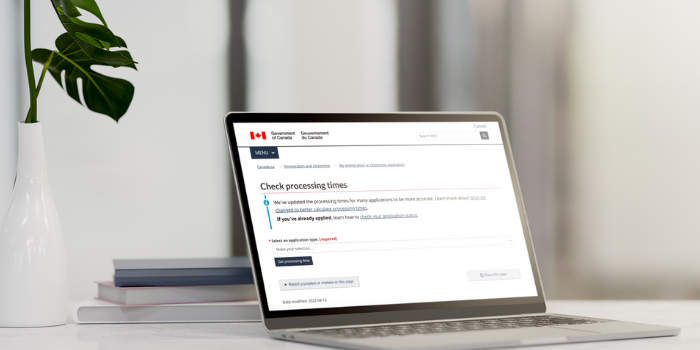
The first place to check is the official IRCC processing time tool. Select the application type that matches your situation as closely as possible.
For example, if you applied through Express Entry, choose the correct economic immigration option. If you applied through family sponsorship, select the exact sponsorship category and whether the applicant is inside or outside Canada.
After checking the official estimate, it can also help to compare your timeline with other applicants who submitted similar applications. This is where a community-based tracker can be useful.
Use immiGuide Time Tracker to compare your PR timeline
Official processing times give you a general estimate, but they do not always show what other applicants are experiencing in real life.
With immiGuide Time Tracker, you can enter your Canada immigration timeline and compare it with other user-shared timelines.
This can help you understand:
Where you are in the process
How your timeline compares with similar applicants
Which steps often take longer
Whether others in the same category are receiving updates
What stage may come next
The tracker does not replace official IRCC information, but it can give applicants a clearer picture while waiting.
Canada PR processing time vs. PR card processing time
It is also important to know the difference between Canada PR processing time and PR card processing time.
Canada PR processing time refers to the time it takes to receive a decision on your permanent residence application.
PR card processing time refers to the time it takes to receive your physical permanent resident card after you become a permanent resident.
These are separate timelines. Receiving approval or eCOPR does not always mean your PR card will arrive immediately.
What you can do while waiting for PR
While waiting for your Canada PR application, you should stay organized and check your account regularly.
Make sure your contact information is up to date. Respond quickly if IRCC asks for documents. Keep copies of all submissions, letters, receipts, and application updates.
You can also record your timeline, including dates such as:
Application submitted
AOR received
Biometrics request
Biometrics completed
Medical passed
Eligibility update
Background check update
Final decision
Portal email
eCOPR
PR card received
Tracking these steps makes it easier to understand your own progress and compare your timeline with others.
Final thoughts
Canada PR processing time can be different for every applicant. The timeline depends on your immigration category, application completeness, IRCC workload, document verification, background checks, and other factors.
The best approach is to check the official IRCC processing time tool, keep your documents organized, respond quickly to requests, and use tools like immiGuide Time Tracker to compare your progress with similar applicants.
Waiting is difficult, but having better visibility can make the process feel more manageable.
Express Entry processing time
Work permit processing time
Study permit processing time
Canadian citizenship processing time